
Spider Control in San Antonio, TX
Most of them are harmless. Two are worth taking seriously. Here's how to tell.
Spiders are the pest people most want gone and most often misidentify. San Antonio has a lot of species, the overwhelming majority of which are harmless and are quietly eating the insects you would otherwise be dealing with. Two are worth treating differently. The useful starting point is knowing which is which, because that determines whether you have a real problem or just an unwelcome roommate.
The Two Worth Knowing
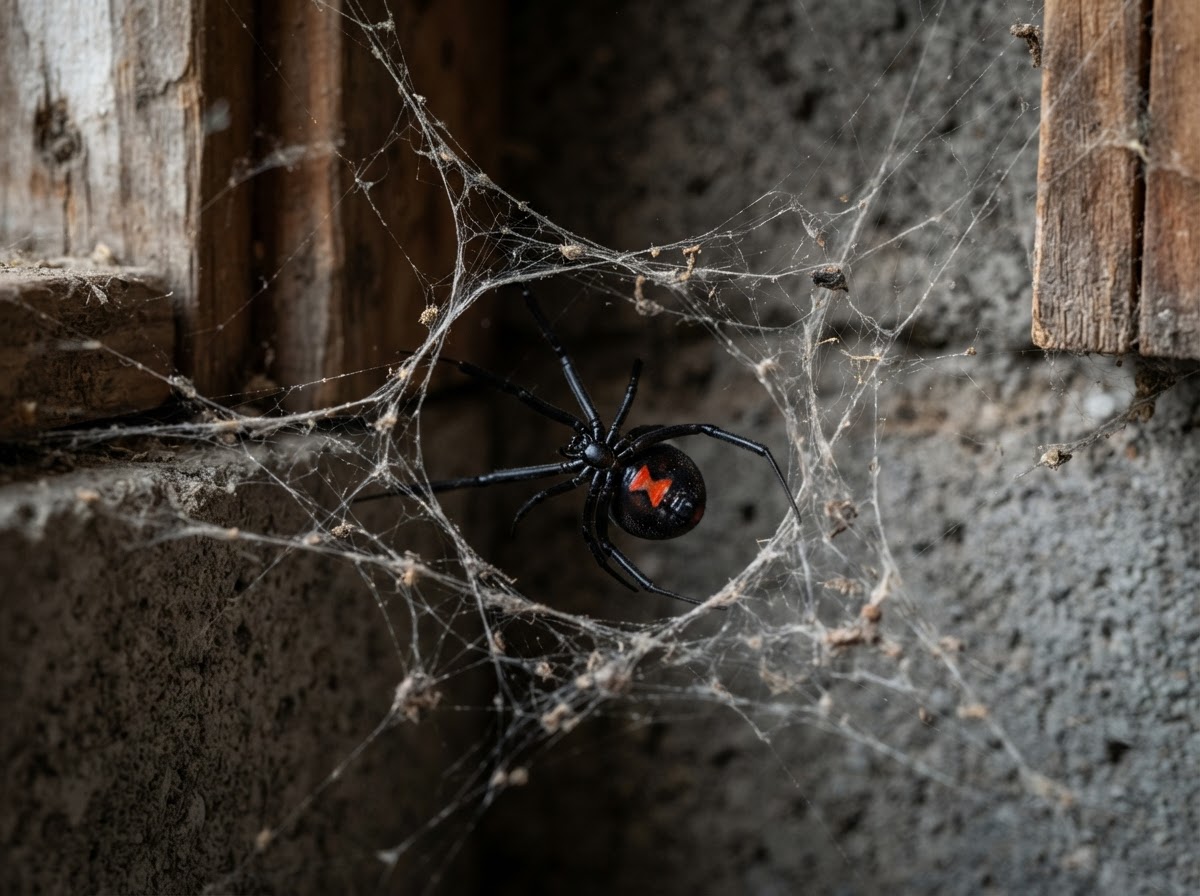
Black widow
Glossy black, roughly half an inch in the body, with a red hourglass marking on the underside of the abdomen. Immature females and males look different and are less distinctive, which is part of why they get missed.
Where they turn up here: garages, sheds, woodpiles, under outdoor furniture, inside water meter boxes, around irrigation valve covers, in the corners of window wells, and under the lip of anything that has been sitting outside. They build irregular, messy webs close to the ground rather than the neat orb webs people picture, and the silk is noticeably tough.
They are not aggressive and they do not chase anything. Almost every encounter happens because someone reached into a space without looking, or moved something the spider was under.
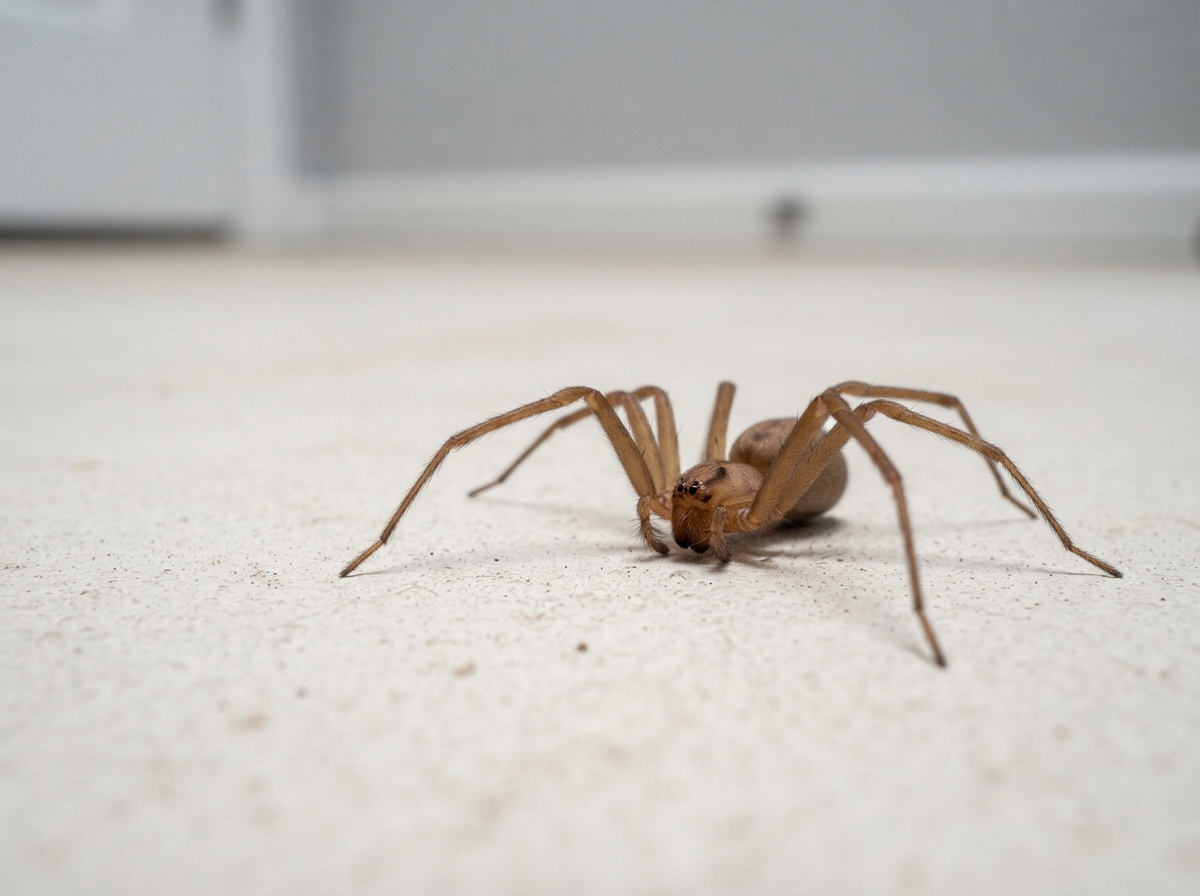
Brown recluse
Small, uniformly tan to brown, with a darker violin-shaped mark behind the head pointing backward. The more reliable identifier for anyone comfortable looking closely is the eyes — recluses have six arranged in three pairs, where most spiders have eight.
They prefer undisturbed spaces: closet floors, storage boxes, garages, attics, behind furniture that never moves, inside shoes and clothing that has been sitting. The name is accurate. They avoid activity and they are not found in the middle of a busy room.
Recluses are less common in San Antonio than people assume, and enormously over-identified. Most spiders reported as recluses turn out to be something else.
If you are bitten
If you believe you have been bitten by a black widow or a brown recluse, seek medical care. If you can safely photograph or contain the spider without touching it, that helps identification.
That is the extent of what this page can usefully say about it. Anything beyond that is a question for a doctor.
The Ones You're Probably Seeing
Most spiders people bring in for identification are on this list.
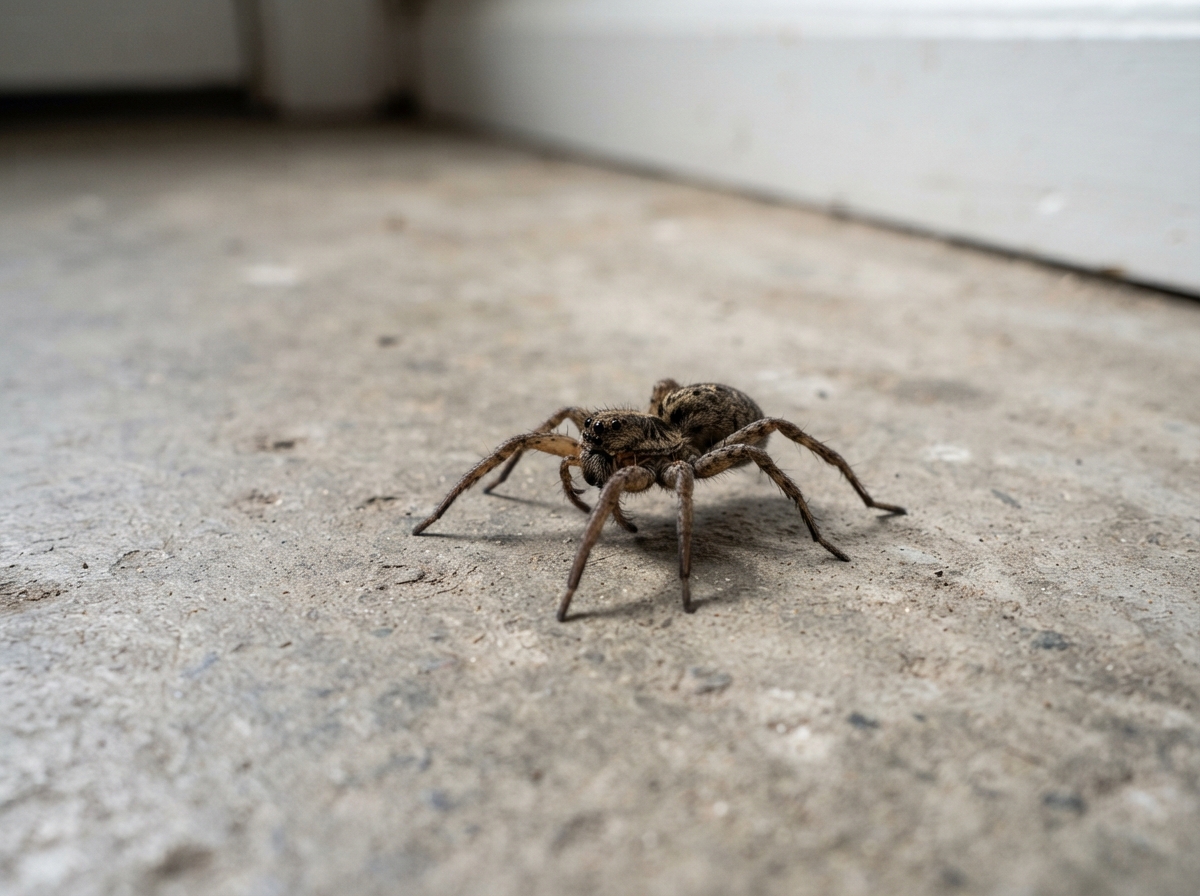
Wolf spiders
Large, brown, hairy, fast, and often mistaken for a tarantula or a recluse. They hunt on the ground rather than building webs to catch prey. Harmless, and startling mostly because of the speed.
- Jumping spiders. Small, compact, often with iridescent markings, and they turn to look at you. Harmless and among the more useful predators around a house.
- Orb weavers. The ones building large circular webs across a doorway or between shrubs overnight. Harmless. Frequently rebuilt in the same spot each evening.
- Cellar spiders. Long thin legs, small body, loose webs in corners of garages and bathrooms. Sometimes called daddy longlegs. Harmless.
- Grass spiders and funnel weavers. Sheet webs with a funnel retreat, usually in shrubs, ground cover, and along foundations. Harmless.
- Tarantulas. Large, slow, and generally outdoors. Texas brown tarantulas are seen most in late summer and fall when males wander looking for mates. Harmless and worth leaving alone.
If none of these matches what you are looking at, a photo will usually settle it faster than a description.
Spiders Are a Symptom
This is the part that changes what you should actually do.
Spiders are predators. They are in your house because there is something in your house for them to eat. A garage with a lot of spiders has a lot of insects, whether or not you are noticing them. Web activity around exterior lights means moths and flying insects are being drawn in every night.
That means spraying spiders directly is the least effective possible approach. The spiders you kill get replaced by the next ones to find the same food supply. Reducing what they are eating, and closing how they are getting in, is what actually changes the population.
It also means a sudden increase in spiders is worth paying attention to. It usually indicates something else increased first.
Why San Antonio Homes Get Spiders
- Exterior lighting. Bright white lights near doors draw flying insects all night, and spiders set up where the food is. This is the single biggest factor most people can change.
- Clay soil movement. Foundation cracks and gaps around penetrations open as our soil expands and contracts.
- Weep holes. Open by design on brick veneer.
- Garage doors. Worn bottom seals and the gaps at both bottom corners.
- Mulch, ground cover, and stacked material against the foundation, which provides harborage right at the entry points.
- Seasonal movement. Activity increases in late summer and fall as spiders mature and males wander looking for mates. That is usually why people suddenly notice more of them.
- Storage that does not get disturbed. Boxes, seasonal decorations, and stored clothing in a garage or attic are ideal for the species that prefer to be left alone.
How Steve Handles Spiders
- Identification. Determining what you actually have, since the two that matter are handled differently from the rest.
- Finding what they are eating. Spider populations track their food supply, so the insect problem underneath usually needs addressing too.
- Web and egg sac removal in the areas where activity is concentrated.
- Targeted treatment of harborage — corners, voids, under eaves, and the specific places spiders actually sit, rather than spraying open surfaces.
- Exterior perimeter work, including entry points, weep holes, and the foundation line.
- Conditions guidance — lighting, storage, vegetation, and what would reduce the draw.
- Follow-up where the situation calls for it.
What Helps Between Visits
- Switch exterior lights near doors to warmer-toned bulbs, which attract far fewer flying insects
- Knock down webs when you see them, since spiders often rebuild in the same spot and removal discourages it
- Vacuum corners, window wells, and under furniture, and empty the canister outside
- Store items in sealed plastic bins rather than cardboard boxes
- Keep firewood off the ground and away from the house
- Pull mulch and ground cover back from the foundation
- Shake out shoes, gloves, and clothing that has been sitting in a garage or shed
- Wear gloves when reaching into meter boxes, valve covers, woodpiles, or under outdoor furniture
- Replace worn garage door seals and close the gaps at the bottom corners
What Spider Control Costs in San Antonio
Pricing depends on the size of the property, whether the work is interior, exterior, or both, how much of the structure is involved, and whether there is an underlying insect problem feeding the spider population. Treating a garage is different work from a whole-property program.
Steve gives you a number after seeing what you are dealing with.
Spider Control FAQ
Not Sure What You Found?
If you have found something you cannot identify, or you keep finding webs in the same corner no matter how often you clear them, Steve can tell you what you are dealing with and whether there is an insect problem underneath driving it.
Related Services: general pest control | ant control | roach control