
Ant Control in San Antonio, TX
The species decides the treatment. Get that wrong and you make it worse.
Ants are the pest people try hardest to solve themselves, and the one where doing it wrong backfires most reliably. That is not because ants are difficult — it is because the word covers a dozen different insects that respond to completely different approaches. Spraying works on some and scatters others into several colonies. Bait clears some and gets ignored by others. Identifying what you actually have is not a formality. It is the whole job.
Which Ant Do You Have?
Fire ants
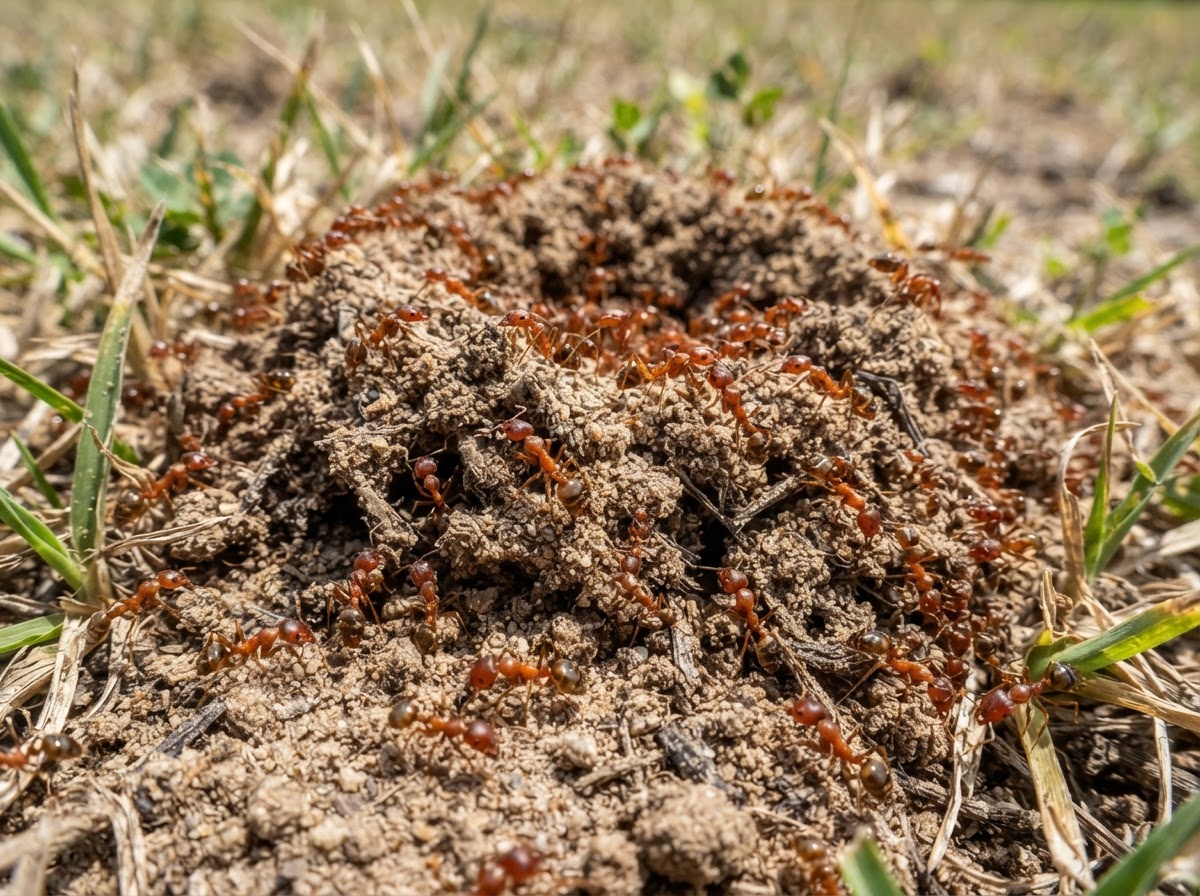
The mound builders in every San Antonio yard. Reddish brown, and they sting rather than bite — usually several at once, because disturbing a mound brings them up fast. New mounds appear after rain, which is why the yard can look clear one week and covered the next.
The mistake almost everyone makes is treating mounds one at a time. Fire ant colonies relocate when disturbed, so pouring something on a mound frequently just moves it a few feet and leaves you feeling like nothing works. What actually reduces the population is broadcast treatment across the whole yard combined with direct treatment of individual mounds — the broadcast reaches colonies you have not found yet, and the mound work handles the ones you have.
If anyone in the household has had a serious reaction to stings, say so when you call. That changes how urgent this is.
Sugar ants and odorous house ants
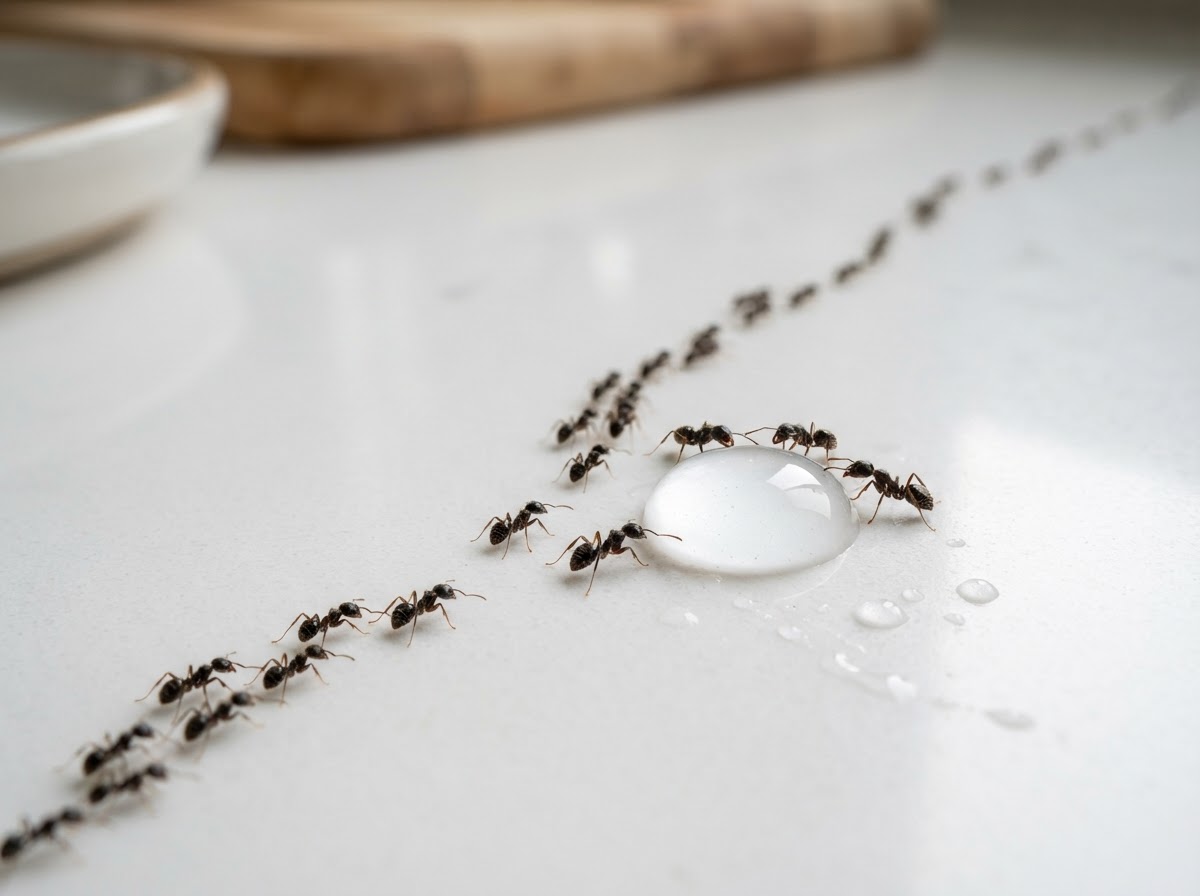
The small ants trailing across a counter to something sweet. Crushing one produces a distinct smell people describe as rotten coconut.
These respond well to bait — and badly to spray. Spraying a visible trail kills the workers you can see and does nothing to the colony producing them, which is why the trail is back in two days. Bait works because foragers carry it back to where it matters.
Carpenter ants
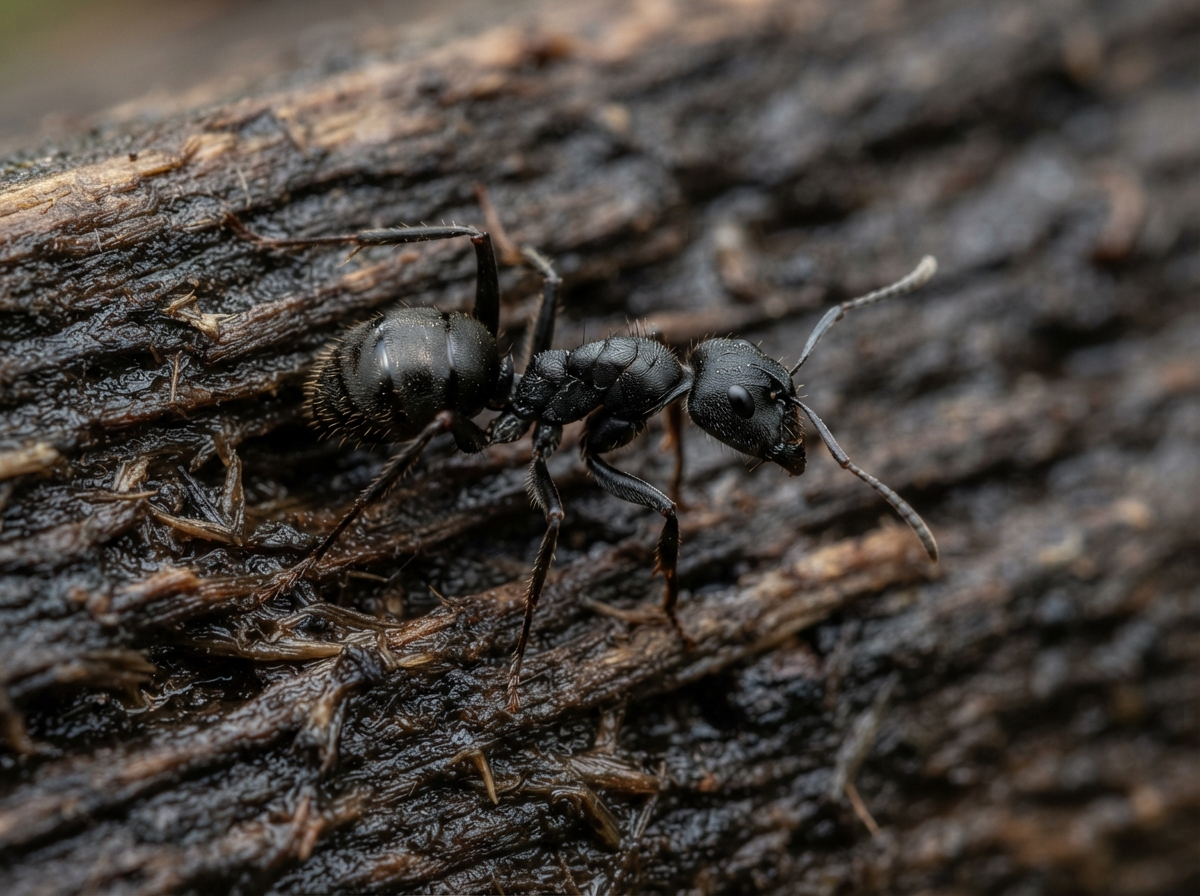
Large black ants that nest in wood. They do not eat it, they hollow it out, and they overwhelmingly choose wood that is already damp or damaged. Finding coarse shavings that look like sawdust near trim, window frames, or a deck usually means carpenter ants.
The important part: they are usually a symptom. Treating the ants without finding the moisture that made the wood attractive leaves the actual problem in place. That is often a leak, poor drainage, or irrigation hitting the structure.
Carpenter ant damage is clean and free of soil, which is what distinguishes it from termite damage — termites pack their galleries with soil.
Tawny crazy ants
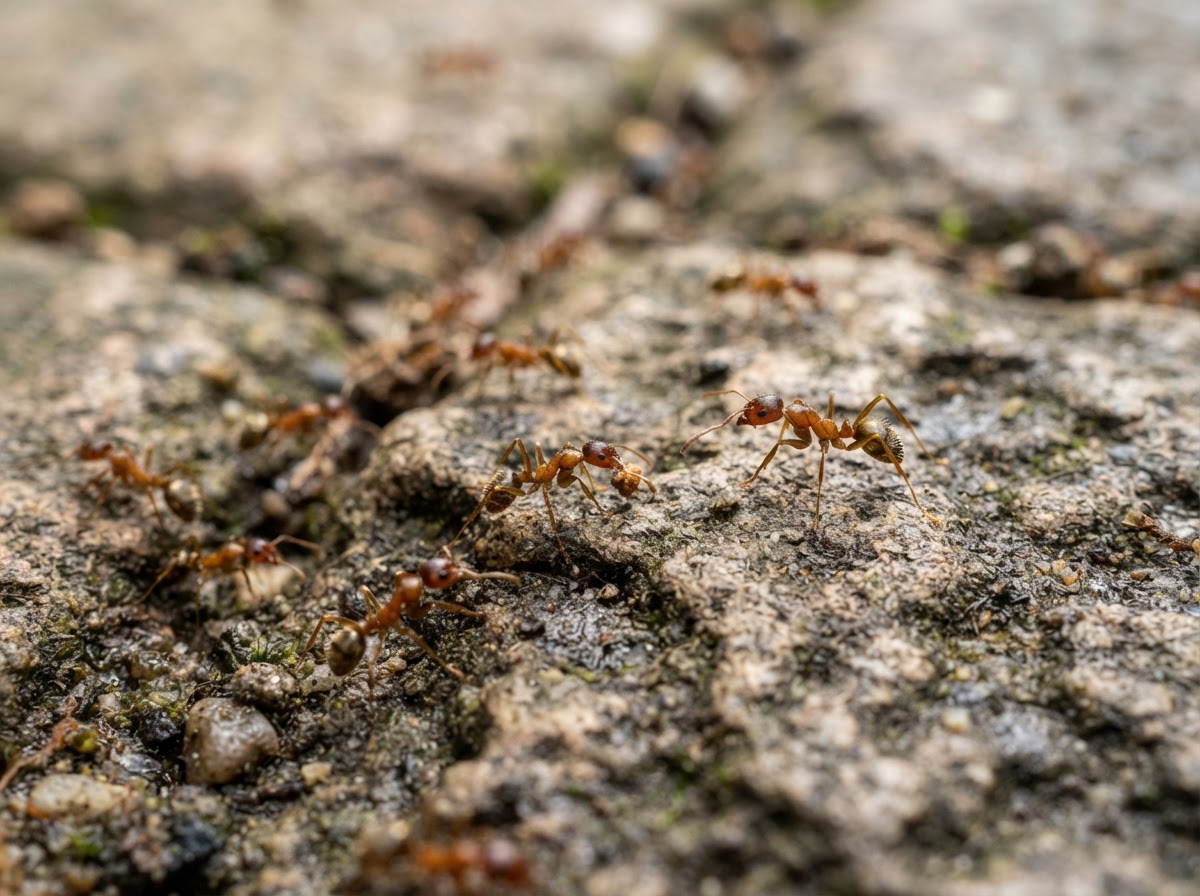
Small reddish-brown ants that move erratically rather than in orderly trails, and turn up in enormous numbers. Established in the San Antonio area.
Two things make them different. They are drawn to electrical equipment and cause real problems in A/C units, pool equipment, and outdoor outlets. And they largely ignore the baits that work on other ants, while over-the-counter sprays tend to disperse them rather than reduce them — which takes a large problem and spreads it out.
Pharaoh ants
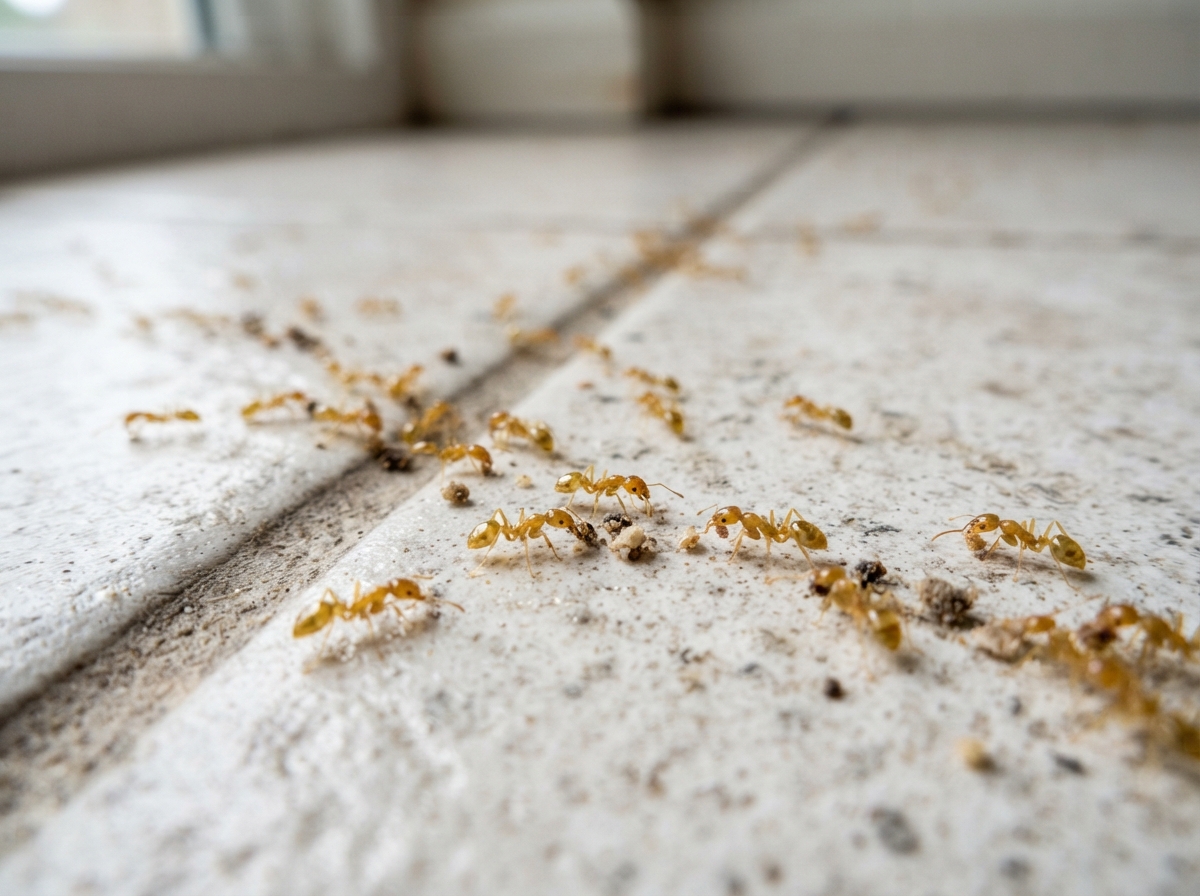
Small and pale yellow to light brown, usually indoors, often in kitchens, bathrooms, and hospitals-style environments with steady warmth and moisture.
These are the clearest argument for identification. Pharaoh ant colonies respond to being sprayed by budding — the colony splits and satellite colonies establish elsewhere in the structure. One problem becomes five, in places you have not found. Baiting is the approach and spraying is actively harmful.
Acrobat ants
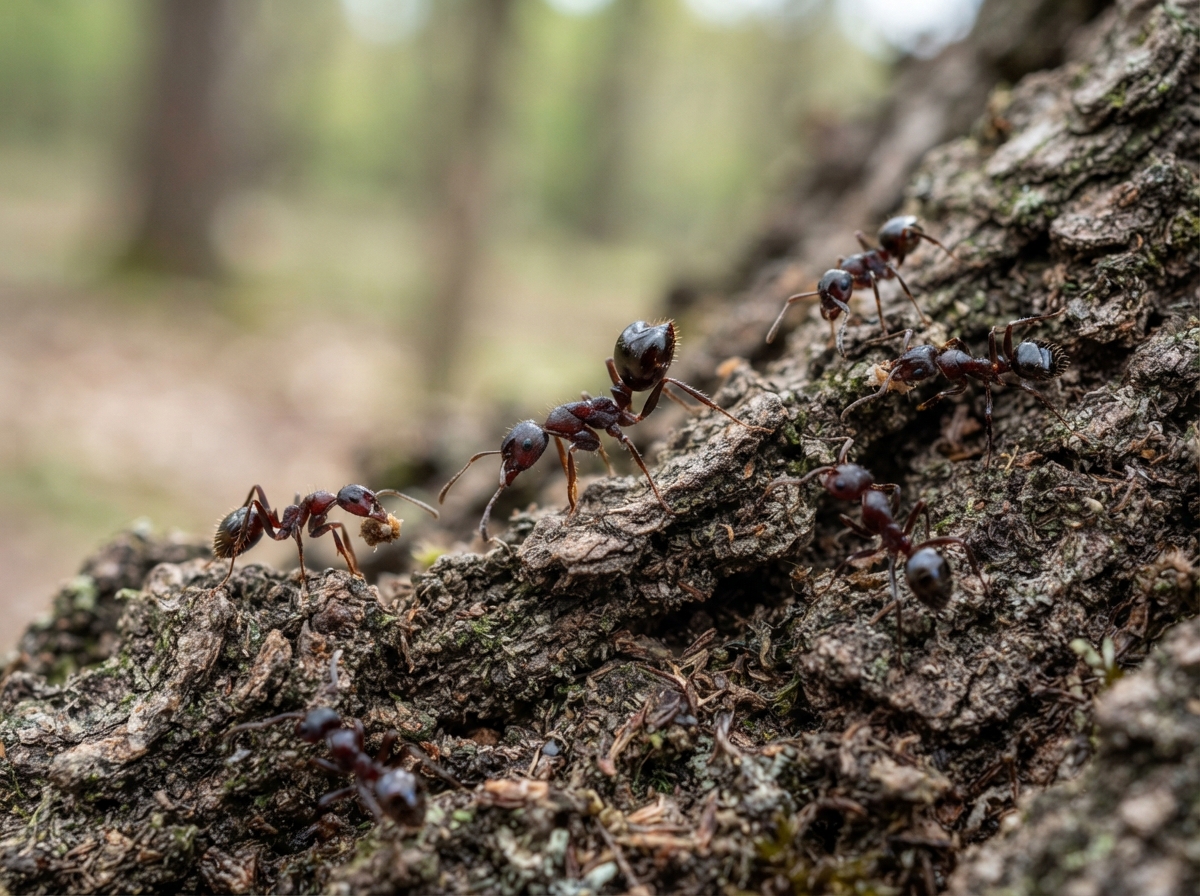
Named for raising the abdomen over the body when disturbed. They nest in damp or damaged wood and in wall voids, often entering along utility lines and tree limbs touching the house. Like carpenter ants, they frequently point toward a moisture issue.
Leafcutting ants
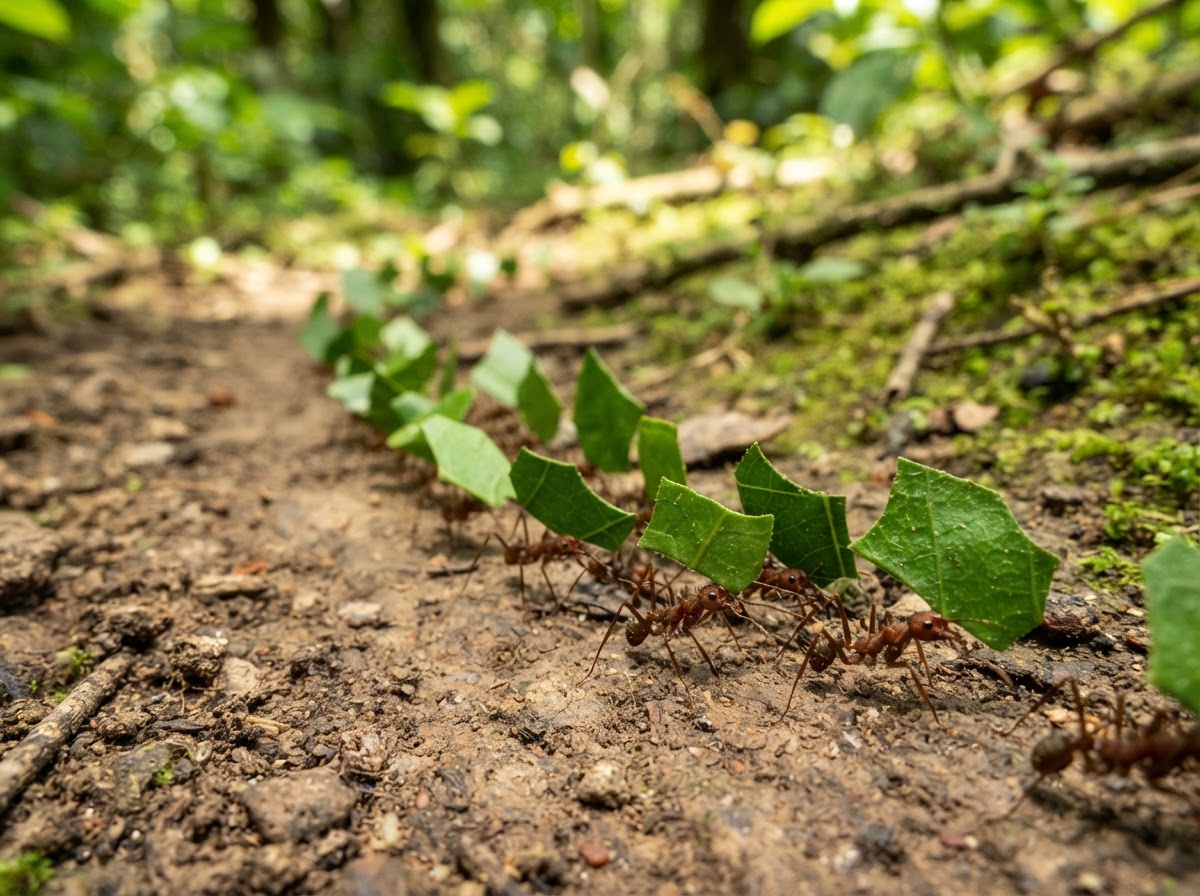
Also called town ants. They strip leaves from trees, shrubs, and gardens overnight and carry the pieces underground to grow fungus, which is what they actually eat. Their nests are large and deep, sometimes covering a substantial area with multiple mounds and vent holes.
Because the colony lives well below the surface, surface treatment does very little. These need a different approach from any other ant on this list.
Ants or Termites?
Worth checking before anything else, because the answer changes everything.
| Feature | Ant | Termite |
|---|---|---|
| Waist | Clearly pinched | Straight, no pinch |
| Antennae | Bent at an elbow | Straight, slightly beaded |
| Wings (if present) | Front pair longer than back | All four the same length |
| Wings after swarming | Stay attached | Shed in piles |
| Damaged wood | Clean galleries, no soil | Soil packed into galleries |
| What you find nearby | Coarse shavings | Mud tubes, discarded wings |
If it has no waist and the wings are all one length, that is a termite, not an ant. See termite treatment.
Why Spraying Often Makes It Worse
- Most consumer sprays repel rather than eliminate. Ants learn to avoid treated surfaces and route around them, so the trail moves rather than stopping.
- Spraying the trail kills foragers, not the colony. The ants you see are a small fraction of what exists, and the queen keeps producing replacements.
- Some species split when sprayed. Pharaoh ants and crazy ants respond to repellent products by budding into multiple colonies. This is the single worst outcome and it is common.
- Spray contaminates bait. If you spray and then bait, ants avoid the treated area and never take the bait back. The two work against each other.
- Mound-by-mound fire ant treatment relocates colonies. Without broadcast treatment you are moving mounds around the yard, not reducing them.
Why San Antonio Homes Get Ants
- Clay soil that moves. Wet and dry cycles crack foundations and open gaps around plumbing penetrations, which is the route inside.
- Weep holes. Standard on brick veneer and open by design.
- Heat and drought. Ants come indoors looking for water, which is why kitchen and bathroom activity spikes in the hottest stretch.
- Rain after dry spells. Floods colonies out of the soil and pushes them toward structures. This is why fire ant mounds appear in numbers after a storm.
- Mulch against the foundation. Moisture and harborage right where you do not want it.
- Tree limbs and shrubs touching the house. A direct bridge past everything at ground level.
- Mild winters. Colonies stay active through more of the year than they do further north.
How Steve Handles Ants
- Identification first. Which species, because everything downstream depends on it.
- Finding the nest or the entry route. Following trails back rather than treating where the ants happen to be visible.
- Baiting where baiting is the right tool, so the colony gets reached rather than the foragers.
- Targeted treatment of voids and harborage rather than spraying open surfaces.
- Exterior perimeter and yard work where the source is outside, including broadcast treatment for fire ants.
- Conditions guidance — moisture, vegetation contact, and food sources that are keeping them around.
- Follow-up where the species and the situation call for it.
What You Can Do
- Wipe down trails with soapy water to break the scent path other ants follow
- Store sweet and greasy foods in sealed containers
- Clean up pet food between feedings rather than leaving bowls out
- Fix leaks under sinks, around the water heater, and in irrigation
- Pull mulch back from the foundation
- Trim tree limbs and shrubs so they are not touching the house
- Seal gaps around plumbing and utility penetrations
- If you are baiting, stop spraying — spray keeps ants away from the bait
What Ant Control Costs in San Antonio
Pricing depends on the species, whether the problem is interior, exterior, or both, the size of the property, and how much of it is involved. A sugar ant trail in one kitchen is different work from broadcast fire ant treatment across a half-acre yard, and both are different from a leafcutting ant colony.
Steve gives you a number after seeing what you have.
Ant Control FAQ
Why do the ants keep coming back after I spray?
Because spraying kills the ants you can see and leaves the colony intact. The queen keeps producing workers, and within a couple of days the trail is back. Most consumer sprays also repel, so ants route around the treated area instead of dying off. Bait works differently — foragers carry it back to the colony.
How do I get rid of fire ants in my yard?
Not by treating mounds one at a time. Fire ant colonies relocate when disturbed, so mound-by-mound treatment tends to move them rather than reduce them. Broadcast treatment across the whole yard combined with direct mound treatment is what works, because the broadcast reaches colonies you have not spotted yet.
What does ant control cost in San Antonio?
It depends on the species, whether the work is inside, outside, or both, and how much of the property is involved. Steve gives you a firm number after seeing the situation.
Are these ants or termites?
Check the waist and antennae. Ants have a clearly pinched waist and elbowed antennae. Termites have no waist and straight antennae. If there are wings, ants have a longer front pair while termite wings are all the same length. Damaged wood tells you too — carpenter ant galleries are clean, termite galleries have soil packed in.
Why did spraying make my ant problem spread?
Some species split when they are sprayed. Pharaoh ants and crazy ants in particular respond to repellent products by budding, where the colony divides and satellite colonies establish elsewhere in the structure. One problem becomes several in places you have not found yet.
I have big black ants — is that a problem?
Possibly. Large black ants nesting in wood are usually carpenter ants, and they choose wood that is already damp or damaged. So they are often a sign of a moisture issue — a leak, drainage, or irrigation hitting the structure. Treating the ants without finding the water leaves the real problem in place.
Something is stripping the leaves off my plants overnight.
That is likely leafcutting ants, sometimes called town ants. They carry leaf pieces underground to grow fungus, which is their actual food. Their nests are deep and large, so surface treatment does very little and they need a different approach from other ants.
Do ants in the kitchen mean my house is dirty?
No. Ants come inside looking for water as much as food, which is why activity spikes during the hottest, driest stretch of the year regardless of how clean the kitchen is. Clean surfaces help with some species, but they are not the reason ants showed up.
Can I use bait and spray together?
That combination works against itself. Ants avoid sprayed surfaces, so they never reach the bait or carry it back. If you are baiting, stop spraying and let the bait do what it does.
Are fire ant stings dangerous?
For most people they are painful and produce a raised welt. For someone with a sting allergy the risk is much more serious. If you or anyone in the household has had a strong reaction to stings before, seek medical care immediately if it happens again, and mention it when you call so the work can be prioritized.
Not Sure Which Ant You Have?
If you are seeing trails you cannot get rid of, mounds appearing across the yard after every rain, or large black ants near a window frame, the species determines what actually works. Steve can identify what you have and treat it accordingly instead of guessing.